
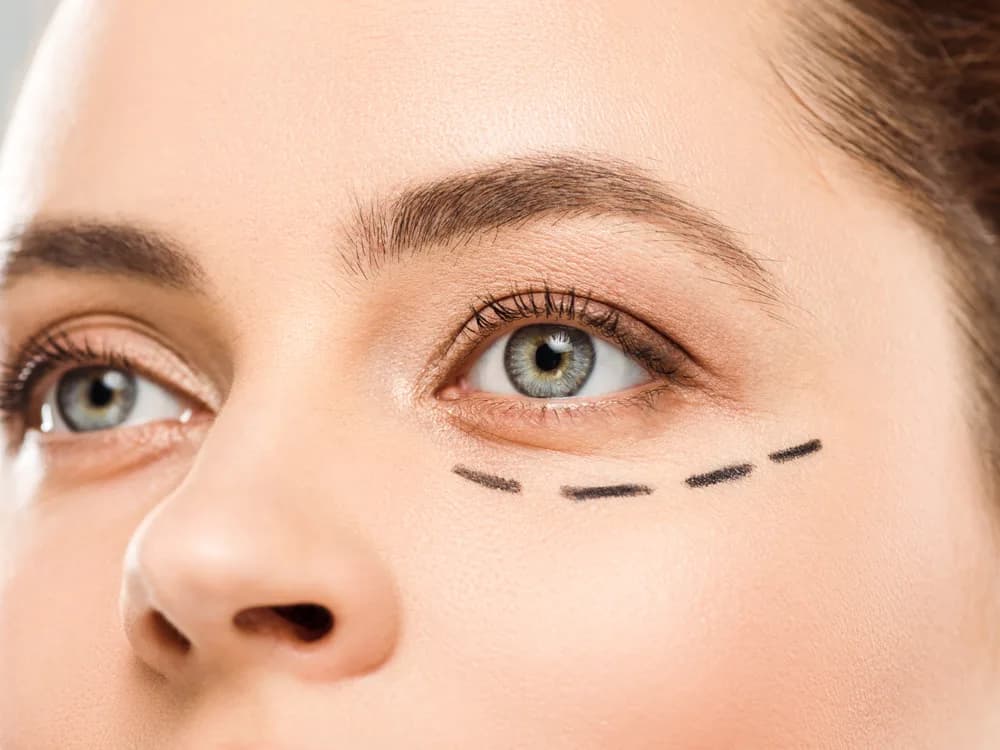
Under-eye bags and dark circles: what causes them, and when is surgery needed?
It isn't tiredness — under-eye bags and dark circles have different causes behind them: genetics, age, fluid retention and pigmentation. When does a cream help, and when does surgery?
"You look tired" — many people with under-eye bags and dark circles hear this constantly, even when they sleep perfectly well. In reality these two features — bags and dark circles — can arise from different causes, and each calls for a different approach.
Bags and dark circles are not the same thing
Although the two often appear together, their mechanisms differ:
- **Under-eye bags** are the forward protrusion of the fat tissue around the eye (fat pads creating a bulge) or swelling from fluid retention — a **structural** change
- **Dark circles** are a **colour** change caused by blood vessels showing through thin skin, increased pigmentation, or a shadow effect
Understanding this difference matters, because the method that solves one problem (surgery for bags, for example) may do nothing for dark circles, and vice versa.
The causes vary
Most common causes of under-eye bags - **Genetics** — the inborn position of the fat pads can run in families and may show even at a young age - **Age-related change** — as the skin and supporting tissues lose elasticity, the fat tissue settles forward - **Fluid retention** — temporary factors such as salt intake, lack of sleep, allergies or crying at night
Most common causes of dark circles - **Genetics/heredity** — thin skin and a tendency to pigmentation can run in families - **Age-related thinning** — a reduced subcutaneous fat layer makes blood vessels more visible - **Pigmentation** — melanin increased by sun exposure or genetic predisposition - **Allergies and fatigue** — temporary swelling and changes in circulation can deepen the shadow
Non-surgical options
In many cases, especially while the problem is still early, noticeable improvement is possible without surgery:
- **Skincare** — retinol, vitamin C and daily SPF can reduce pigmentation over time
- **Filler** — hyaluronic acid placed in the hollow known as the tear trough reduces the shadow effect and softens the look of bags (see botox-filler procedures)
- **Allergy management** — if the cause is an allergic reaction, treating it can reduce the swelling considerably
- **Sleep and lifestyle** — cutting salt intake and sleeping enough can improve swelling driven by fluid retention
When should surgery (lower blepharoplasty) be considered?
Lower blepharoplasty is considered in the following situations:
- The protrusion of the fat pads is **structural**, and filler or skincare produce no meaningful improvement
- The under-eye skin has already slackened and there is excess skin (not only fat, but surplus skin as well)
- The problem has stayed stable for years and non-surgical methods do not give an adequate result
During lower blepharoplasty the surgeon repositions or reduces the excess fat tissue and, where needed, corrects the surplus skin. The incision is usually hidden below the lash line or on the inner side of the eyelid.
| Complaint | Main cause | Suitable approach |
| Shadow/colour only | Pigmentation, thin skin | Skincare, SPF |
| Hollow appearance | Volume loss | Filler (tear trough) |
| Bulge, structural bag | Protruding fat tissue | Lower blepharoplasty |
| Swelling varies (different morning and evening) | Fluid retention, allergy | Lifestyle, allergy treatment |
Baku market range (2026)
The price of lower blepharoplasty depends on the extent of the operation (fat correction only, or skin correction as well). Filler prices, in turn, vary with the amount of material used. In both cases the exact figure is determined only after an individual assessment of your facial structure, at the consultation.
Conclusion
Under-eye bags and dark circles are not two forms of the same problem — identifying the cause correctly is the first step to the right solution. In many cases skincare or filler is enough; in some, lower blepharoplasty gives a more lasting result. The approach best suited to your situation is determined at a free consultation.
*This article is general information and does not replace medical advice; for your individual situation, always consult a doctor.*
Related procedures
Related articles
Hollywood Smile: who is it right for, and who is it not?
E-max veneers do not suit every mouth. Enamel thickness, the dentist's price, the state of things after an old silver filling — the full checklist.

10 questions you should ask at an aesthetic consultation
The first consultation decides the success of the operation. The questions to ask without hesitation — even if they might make the doctor uncomfortable.
Botox for the first time: before and after — a complete guide
What should you know before and after botox? Dosage, zones, pain, when the result shows — precise answers for patients aged 25-35.
Next step: a free consultation
Fill in the form — our team will contact you within 24 hours with the right specialist, a personal plan and an exact price.
- Completely free, no obligation
- The right specialist for you
- Transparent price — no hidden costs
- Full confidentiality