
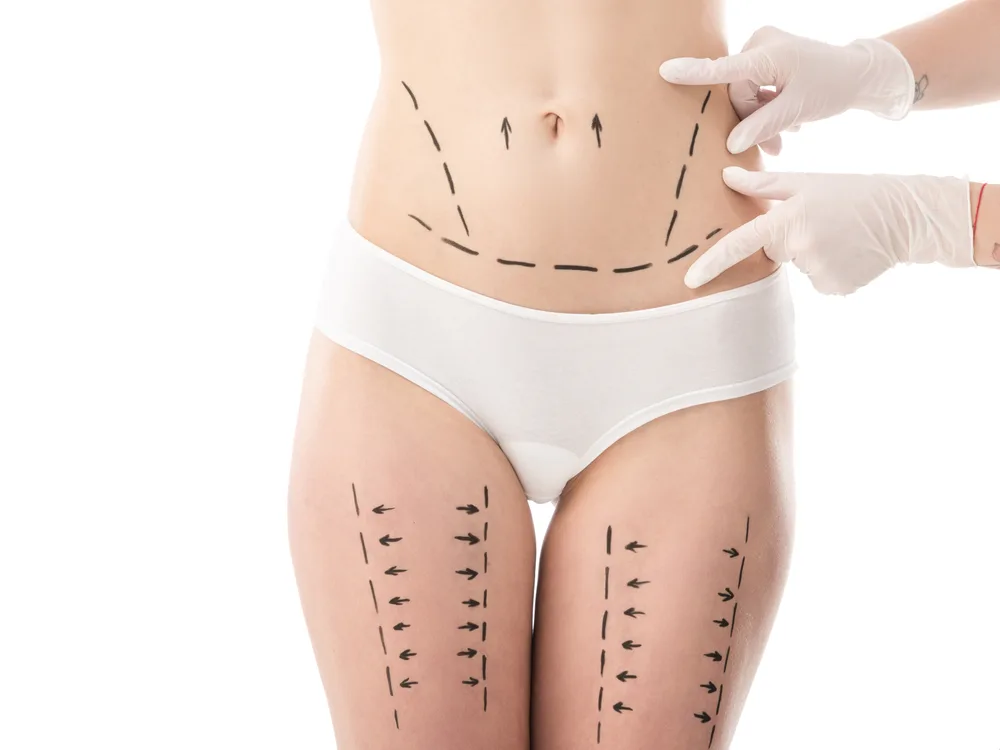
Who Should Not Get Liposuction: Contraindications and Reality
Liposuction is not a weight-loss method. Here is who it does not suit, based on skin, health and expectations.
Medically reviewed by Op. Dr. Elvin Əliyev.
Liposuction is not a way to lose weight, and it is not a weight-loss method at all — it is a body-contouring procedure for stubborn local fat that does not respond to diet and exercise. If your goal is overall weight loss, your skin is loose or of poor quality, or you have certain health conditions, liposuction may not be the right first step.
Liposuction is not a weight-loss method
The amount of fat removed during liposuction is limited, and the procedure is not designed to meaningfully reduce total body weight. If your main goal is to lose weight and lower your overall body mass, proper nutrition and physical activity are a better fit. Liposuction is meant for people at a stable weight who are bothered by stubborn fat in specific areas (abdomen, waist, thighs).
If you are still in the process of losing weight, a surgeon usually recommends waiting until your weight stabilizes, because further weight change afterward can cause loose skin and undo the result.
Many patients confuse liposuction with bariatric surgery, even though the two serve entirely different goals. Bariatric surgery changes how the digestive system works to reduce overall weight, while liposuction only refines the local contour of a body that has already reached a stable shape. Understanding this difference in advance helps keep expectations realistic.
When skin elasticity is not enough
Good liposuction results depend heavily on skin elasticity. After fat is removed, the skin needs to retract on its own and follow the new contour. In people who have lost skin elasticity with age, through significant weight changes, or for genetic reasons, the skin can remain loose after liposuction. In these cases a surgeon often recommends combining liposuction with a skin-removal procedure such as abdominoplasty, or performing it separately. You can read more about the difference between the two approaches and when each is chosen in the liposuction vs abdominoplasty comparison.
At a consultation, a surgeon usually checks the skin by pinching it to assess thickness and how quickly it springs back, asks about your medical history, and finds out about previous pregnancies or major weight changes. This assessment matters for choosing the most suitable approach.
Which health conditions get in the way
Certain medical conditions raise the risk of liposuction or lead a surgeon to postpone it. These include:
- Uncontrolled diabetes
- Blood clotting disorders or a history of deep vein thrombosis
- Severe cardiovascular disease
- An unhealed infection or an active inflammatory process
- Circulation problems affecting a large part of the body
- Pregnancy
Each of these is only assessed after an exam — the final decision is made by the surgeon, together with other doctors if needed.
Smoking is a separate risk factor, since it reduces blood flow to tissue and can slow healing. Many clinics require quitting smoking for a set period before and after surgery. Tolerance for general anesthesia is also assessed in advance, which is why an anesthesiologist consultation is a standard part of preparation.
Why body mass index matters
Liposuction is usually recommended for people whose body mass index (BMI) falls within a certain range. When BMI is well above 30, surgical risk rises and the result may end up less smooth than expected — in these cases a surgeon may first suggest weight management, or sometimes a different approach altogether. The exact cutoff can only be judged at a consultation, together with your overall health markers.
For people with a high BMI, a weight-management program, working with a nutritionist, or a different medical approach is sometimes recommended first. This matters not only for lowering surgical risk but also for keeping the result stable over the long term.
Realistic expectations matter
Liposuction reshapes contour, but it does not remove cellulite, does not tighten skin, and does not prevent future weight gain. If your expectation is "a completely new body" or "never gaining weight again," that does not match what is medically realistic. Discussing your expectations openly with the surgeon at the consultation is the most important step toward understanding the likely result in advance.
Keeping the result stable afterward requires continuing balanced nutrition and regular physical activity. Liposuction is not a one-time fix — it is a correction built on top of your existing lifestyle, not a replacement for it.
When to see a doctor
In the following situations, a medical consultation is required before deciding on liposuction:
- If you have had unexplained weight change in recent months
- If you have cardiovascular symptoms such as chest pain, shortness of breath, or swollen legs
- If you are taking blood-thinning medication
- If you are undergoing ongoing treatment for a chronic condition
If any of these apply, the decision should only be made after an exam and a specialist's opinion.
Frequently asked questions
Is liposuction an alternative to losing weight?
No. Liposuction contours local fat deposits; it is not a method for overall weight loss. Weight loss is achieved through diet and physical activity.
If my weight is normal but my skin is loose, would liposuction help?
In this case, liposuction alone may not be enough, since it does not tighten skin. A surgeon will assess your skin quality and may recommend a separate or combined procedure.
I have diabetes — can I have liposuction?
Only if the condition is controlled and your doctor considers it appropriate. Uncontrolled diabetes increases infection risk and complicates healing.
After what age is liposuction not recommended?
Age by itself is not a contraindication, but skin elasticity decreases with age, so the result can differ. The decision is based more on overall health and skin quality than on age alone.
Can fat come back after liposuction?
The fat cells that are removed do not return, but the remaining cells can enlarge, and new fat can accumulate if you gain weight. That is why maintaining a stable weight afterward is recommended.
Through Dr Plasty you can book a consultation to discuss whether liposuction suits you. For more, see the liposuction procedure page and the article on compression garments after surgery.
This article is for information only and does not replace a medical consultation.
Related procedures


Next step: a free consultation
Fill in the form — our team will contact you as soon as possible with the right specialist, a personal plan and an exact price.
Free
Completely free, no obligation
The right doctor
The right specialist for you
Transparent price
Transparent price — no hidden costs
Confidentiality
Full confidentiality