
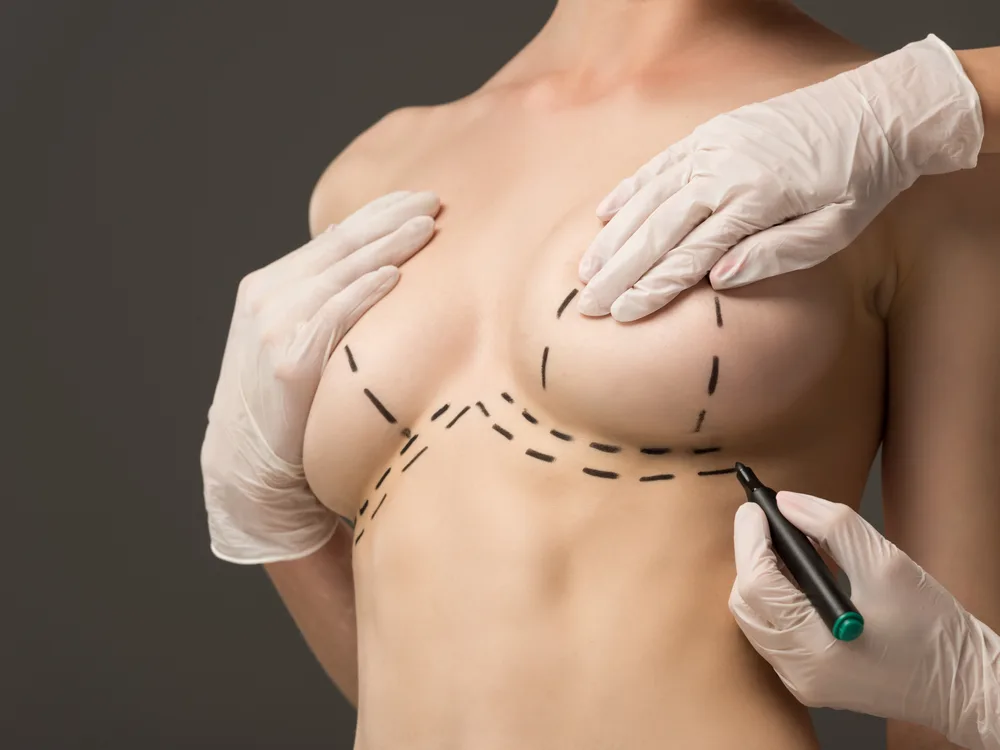
Mastopexy (breast lift): with or without implants, scars
Mastopexy is a surgery that lifts sagging breast tissue. Whether an implant is needed alongside it and which scar types are used are covered here.
Medically reviewed by Op. Dr. Elvin Əliyev.
Mastopexy is a procedure that corrects breast sagging (ptosis) by lifting the breast into a higher, firmer position. The surgery itself does not increase breast volume — if a volume change is wanted, an implant is added as a separate decision. This article explains who mastopexy suits, when it is combined with an implant, and the types of scars involved.
Who needs a mastopexy?
Breast sagging (ptosis) is usually assessed by degree — from mild sagging up to an advanced degree where the nipple sits below the breast's under-fold line. Mastopexy is most often considered in the following cases:
- Loss of tissue elasticity after pregnancy, breastfeeding or significant weight change.
- Natural age-related sagging.
- Asymmetric breast shape or a downward-pointing nipple.
The exact degree of sagging and the suitable technique are determined only through an in-person examination, since breast tissue structure and skin elasticity are individual to each patient.
If the main cause of sagging is excess breast volume and weight, a lift alone may not be enough — in such cases, combining it with a reduction procedure may be more suitable. More detail on this is in the article on breast reduction surgery.
Is an implant needed together with a mastopexy?
This decision serves two separate goals. Mastopexy lifts the existing tissue but does not add volume. If the patient also wants a larger volume, an implant can be placed during the same surgery. In cases where a lift alone is enough, mastopexy without an implant is chosen. The decision depends on the breast's existing volume, skin elasticity and the outcome the patient expects. More detail on implant types is in this article.
In a combined procedure, the surgeon lifts the tissue and places the implant in the same session, which shortens recovery compared with two separate surgeries. However, the combined approach does not suit every patient — when skin quality is weak, the doctor may recommend doing the lift alone first and leaving the implant for a later stage. This cautious approach serves to protect blood supply and give a more stable result.
Scar types: which technique is chosen when
The shape of the scar changes depending on the degree of sagging:
| Technique | When it's chosen |
|---|---|
| Periareolar (around the areola) | Mild sagging, minimal excess skin |
| Vertical ("lollipop") | Moderate degree of sagging |
| Anchor (inverted-T) | Advanced sagging, significant excess skin |
A longer scar allows more excess skin to be removed, but this does not always mean a more visible mark — the right choice of technique balances both the shape of the result and the appearance of the scar. Scars can look red and raised in the first months, but they usually fade and flatten over 12-18 months. The scar line is planned in areas that are easy to hide under clothing and underwear.
How does the surgery work?
Mastopexy is done under general anesthesia, and its length varies depending on the technique. The surgeon removes excess skin, reshapes the breast tissue and moves the nipple to a higher position. If an implant is added, it is placed during the same surgery. More detail on the overall process is on the mammoplasty page.
During surgery, the nipple and areola are usually not fully detached, only repositioned higher, which allows sensation to be largely preserved. The exact duration of surgery depends on the chosen technique and whether additional steps, such as implant placement, are required.
Recovery period
The following general recommendations are followed during recovery:
- A special supportive bra is usually worn continuously for 4-6 weeks.
- Heavy physical exertion and sport involving intense arm movement should be postponed for at least 4-6 weeks.
- Swelling gradually decreases, but the tissue fully settling into place usually takes several months.
The final shape usually takes full form over 6-12 months, since the tissue and scars gradually stabilize during this period. Small changes in breast shape during this time are considered normal, and a hasty assessment should not be made.
How lasting is the result: the effect of pregnancy and weight change
Mastopexy corrects existing sagging, but a future pregnancy, breastfeeding or significant weight change can affect the breast tissue again. This is why, if long-term family planning is a factor, it is worth discussing with the doctor before surgery. How lasting the result is also depends on skin elasticity and genetic factors.
For this reason, many doctors separately discuss the timing of surgery with patients planning a future pregnancy. An additional revision procedure may be needed after a pregnancy, but this can only be assessed based on the individual situation.
When to see a doctor
If the following signs appear during recovery, you should see a doctor:
- Ongoing bleeding, pus-like discharge or fever along the incision line.
- A sudden, significant increase in swelling on one side.
- Long-lasting loss of sensation in the nipple.
- Stitches coming apart early.
Frequently asked questions
Does mastopexy affect breastfeeding?
This depends on the technique used and how much the milk ducts are preserved. If breastfeeding is planned in the future, this must be discussed with the doctor before surgery so the choice of technique accounts for this factor.
Do the scars disappear completely?
The scars do not disappear completely, but they usually fade and flatten significantly over time. Detailed scar-care recommendations are given by the doctor.
Does a mastopexy without an implant look less full?
No, the goal is not to increase volume but to return the existing tissue to a higher, firmer position. If extra volume is wanted, that is addressed separately with an implant, since the two goals require different surgical steps.
How many years does the result last?
The exact duration varies depending on skin elasticity, age and lifestyle factors. Maintaining a stable weight and sun protection that preserves skin elasticity can help the result last longer. You can book a consultation to assess your situation through Dr Plasty.
This article is for information only and does not replace a medical consultation.
Related procedures
Next step: a free consultation
Fill in the form — our team will contact you as soon as possible with the right specialist, a personal plan and an exact price.
Free
Completely free, no obligation
The right doctor
The right specialist for you
Transparent price
Transparent price — no hidden costs
Confidentiality
Full confidentiality